Deer species
Which deer are on your land?
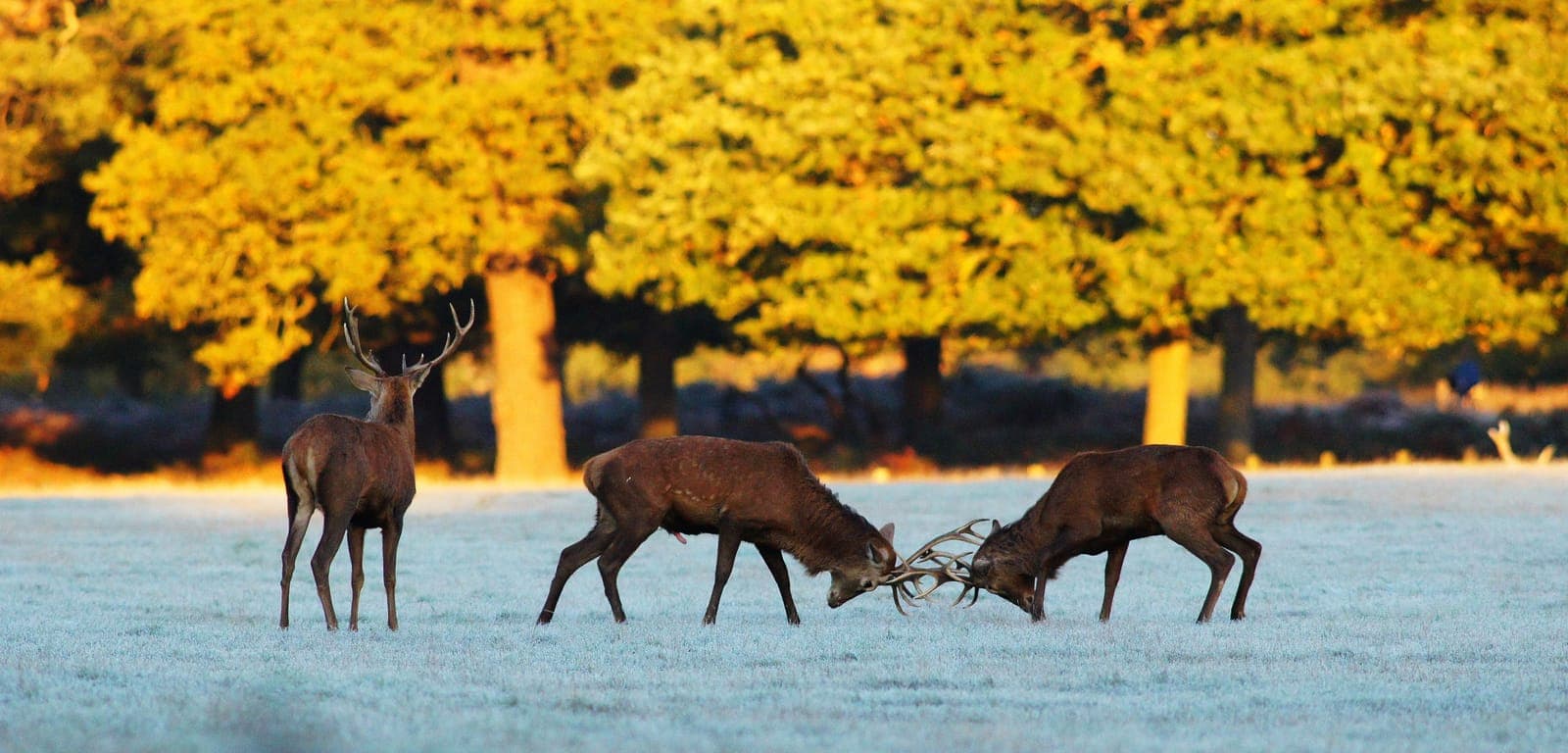
Six species of wild deer live in the UK, and five of them are found across the areas we cover. Which one you have changes the guard height, the fence, and when damage is likely, so it's worth knowing.
Photo: Peter Trimming / Geograph.org.uk, CC BY-SA 2.0
Size
Side by side, by shoulder height
The species we cover
Find out more about each one
 Native
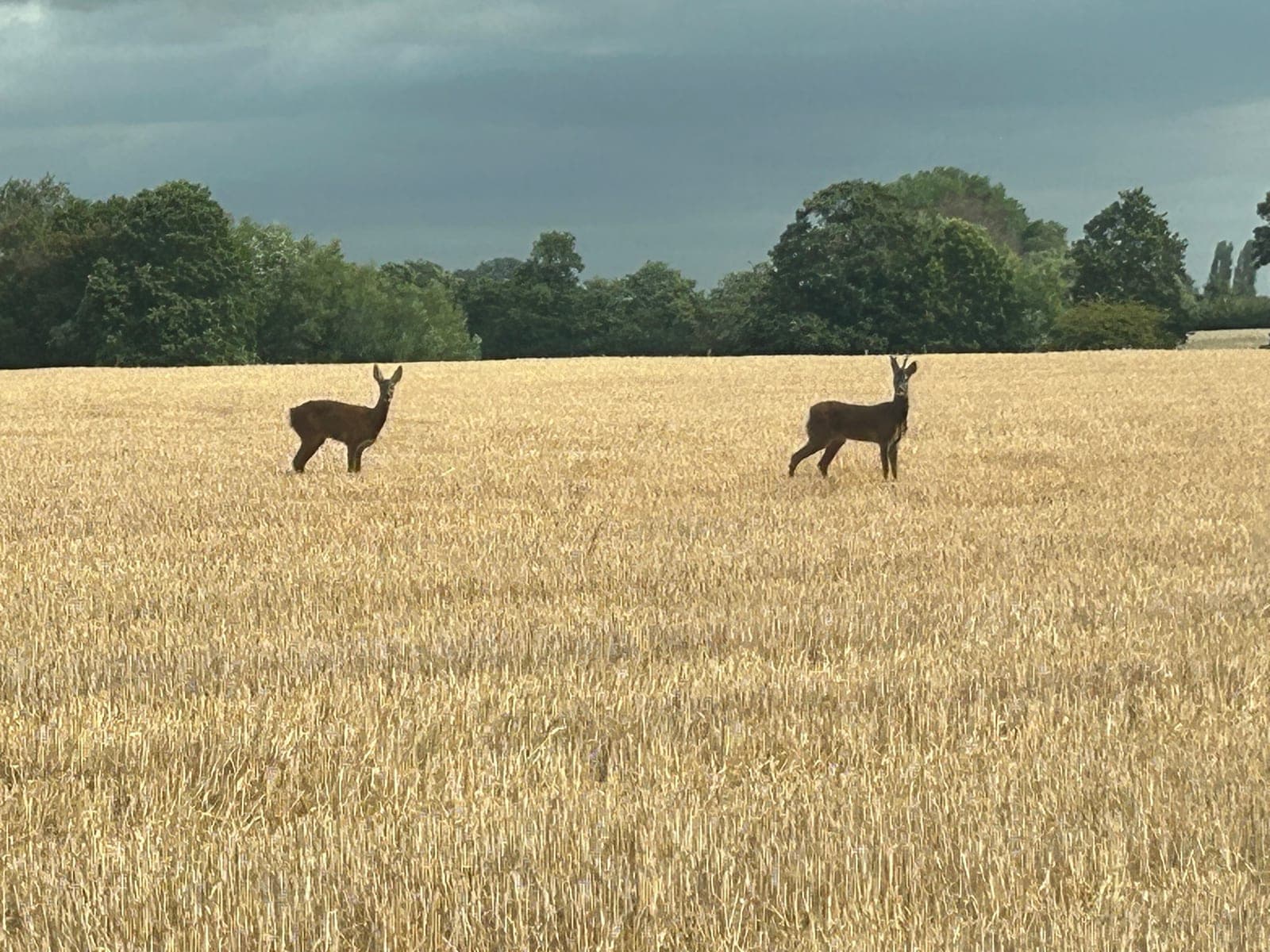
Roe deer
Capreolus capreolus
One of only two truly native deer in Britain, and the one you're most likely to have on your land anywhere across Yorkshire and the North.
- Shoulder
- 60–75 cm
- Guard height
- 1.2 m
Roe deer guide →
 Introduced
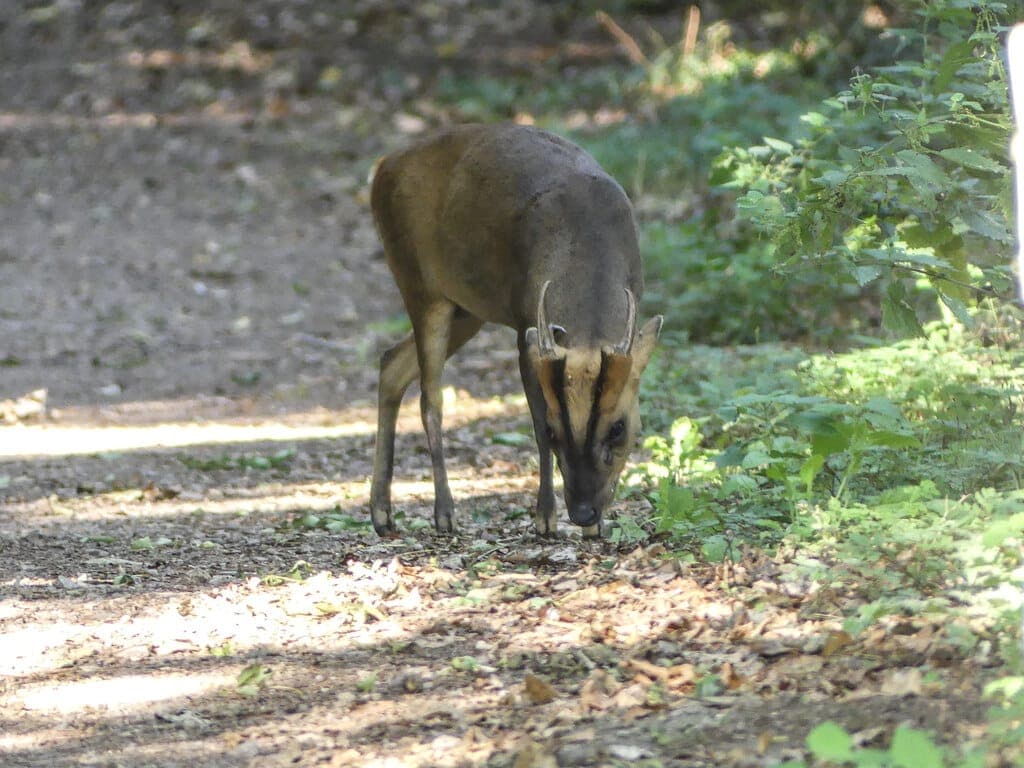
Muntjac
Muntiacus reevesi
Small, secretive, and breeding all year round. Reeves' muntjac were brought from China to Woburn Park around the turn of the 20th century, and have been classed as an invasive species since 2019.
- Shoulder
- 44–52 cm
- Guard height
- 1.2 m
Muntjac guide →
 Introduced
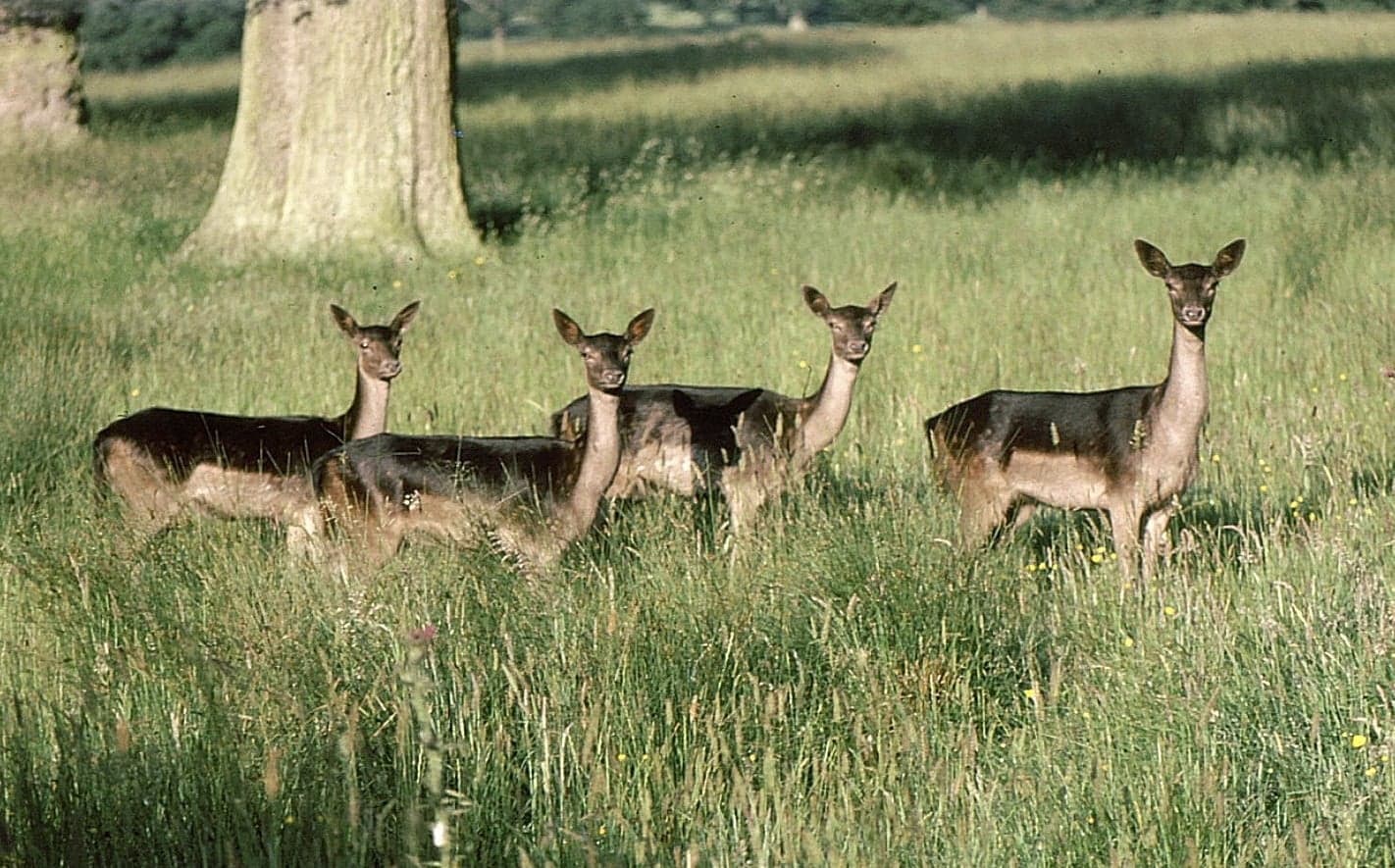
Fallow deer
Dama dama
Herd deer with broad, palmate antlers and a groaning autumn rut, long associated with parkland and larger estate woods.
- Shoulder
- 73–95 cm
- Guard height
- 1.8 m
Fallow deer guide →
 Native
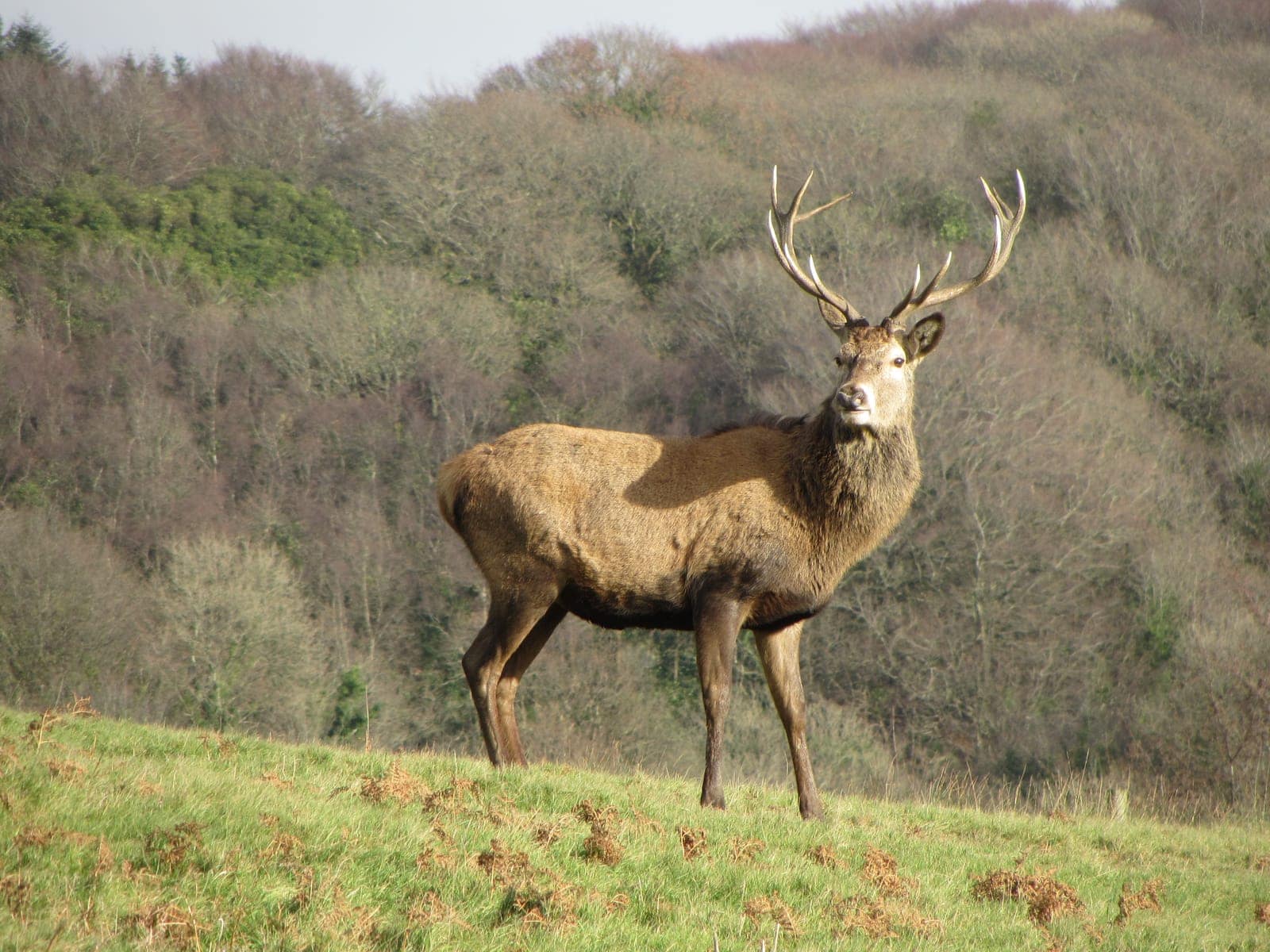
Red deer
Cervus elaphus
Britain's largest land mammal, and one of only two truly native deer. In England they prefer woodland and forest, but adapt to open moor and hills.
- Shoulder
- 1.07–1.37 m
- Guard height
- 1.8 m
Red deer guide →
 Introduced
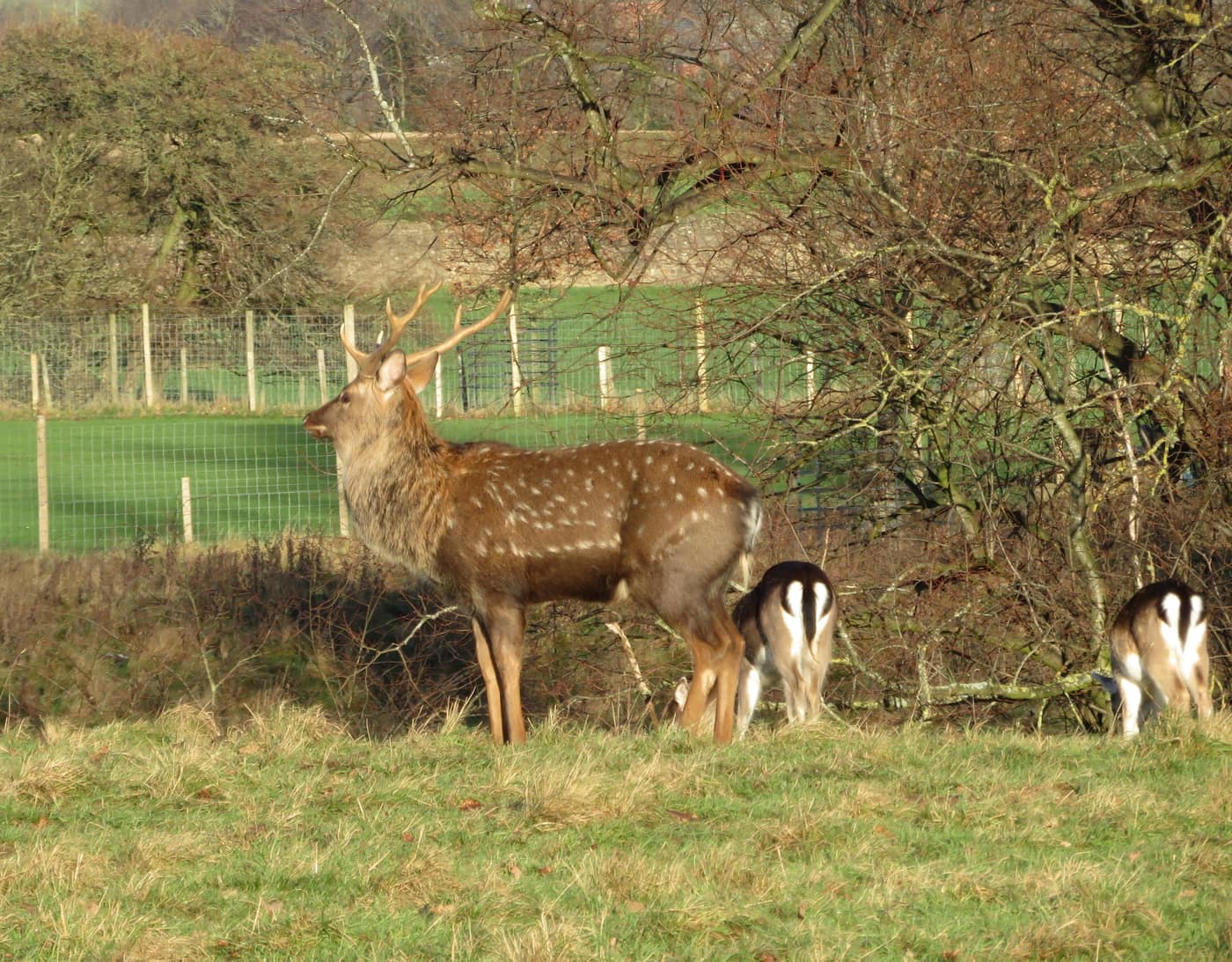
Sika deer
Cervus nippon
Introduced from the Far East in 1860, sika are close relatives of red deer, known for bark stripping and an extraordinary range of calls.
- Shoulder
- 50–95 cm
- Guard height
- 1.8 m
Sika deer guide →
Still not sure?
We'll tell you what's there
Species can usually be worked out from tracks, droppings, and browsing height, even without a sighting. A survey is free.
Book a free survey →Planting soon? Check which tree guards you need.
Our tree guard height guide shows each species at its real shoulder height next to the minimum guard it needs.
Or call Chris on 07397 942663. He'll call you back the same day.