
EWCO Deer Fencing: What the Grant Actually Pays For
By Donaldson Deer Service · 6 May 2026
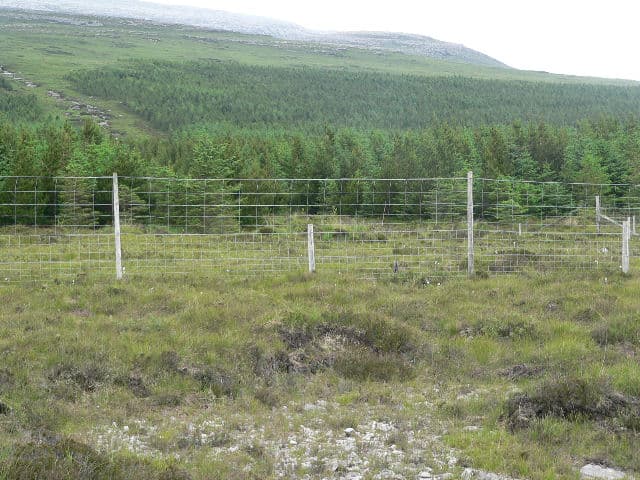
Photo: RH Dengate / Geograph.org.uk, CC BY-SA 2.0
Ask most people applying for EWCO how they're covering the deer fencing and the answer is usually "out of my own pocket, same as always." It doesn't have to be. The scheme funds fencing directly, at a set rate per metre, on top of everything else it pays for new woodland. The catch isn't whether it pays. It's whether your application gets approved at the rate you actually need.
How the payment is actually structured
EWCO isn't a lump sum you spend as you see fit. It's built from standard cost items: ground preparation, planting, tree protection, and maintenance payments running for 15 years at £400 per hectare. Fencing sits inside that list as one line, priced by the metre, alongside guards and shelters. Claim for fencing you haven't specified correctly and it gets queried or reduced, not waved through.
Why the rate moves
The current rate is £10.27 per metre, but these standard cost items get revised periodically, sometimes more than once a year, so a figure you saw quoted even six months ago may already be out of date. Always check the live rate at the point you apply rather than budgeting off an old number, or check our Grants & Funding page for the current position.
The part most applications get wrong
Fencing isn't approved just because you've asked for it. The Forestry Commission wants the spec, height and type, to match the actual deer pressure on the site, not a generic default. An application that specifies 1.8 metre fencing without anything backing that up is weaker than one that can point to a proper assessment of what's on the land and why that height's needed.
Where a survey fits before you apply
This is the gap a Deer Number Survey & Impact Assessment fills. It tells you which species are actually present, in what numbers, and what they're likely to do to new planting, the exact evidence an application is stronger for having. It's free, and for landowners anywhere across Yorkshire and the surrounding counties, it's usually worth doing before the application goes in, not after it's queried.
It's also worth knowing that fencing isn't always the right call even once it's funded. If a smaller area is involved, or access makes a cull more practical than a fence line, it's worth reading what fencing actually solves before committing to it. Sometimes the grant-funded option and the right option aren't the same thing.
Once you know fencing's the right call, the application itself has its own sequence worth understanding before you start. Our Grants & Funding page has the step-by-step process.
Wondering about your own land?
Give us a call and we'll talk it through.
More from the blog