
Service
Fox Control & Removal for Farms and Landowners
Free fox control and removal for farmers, smallholders, and landowners across Yorkshire, North Lincolnshire, East Lancashire, South Durham, and Teesside. Whether fox damage means lost lambs, poultry, or ground-nesting birds, every job starts by confirming a fox really is responsible, then targeted, humane control where the evidence points to it, on its own or alongside deer management as part of wider wildlife management.
Not sure it's a fox? Text a photo to Chris on 07397 942663 and he'll get back to you the same day.
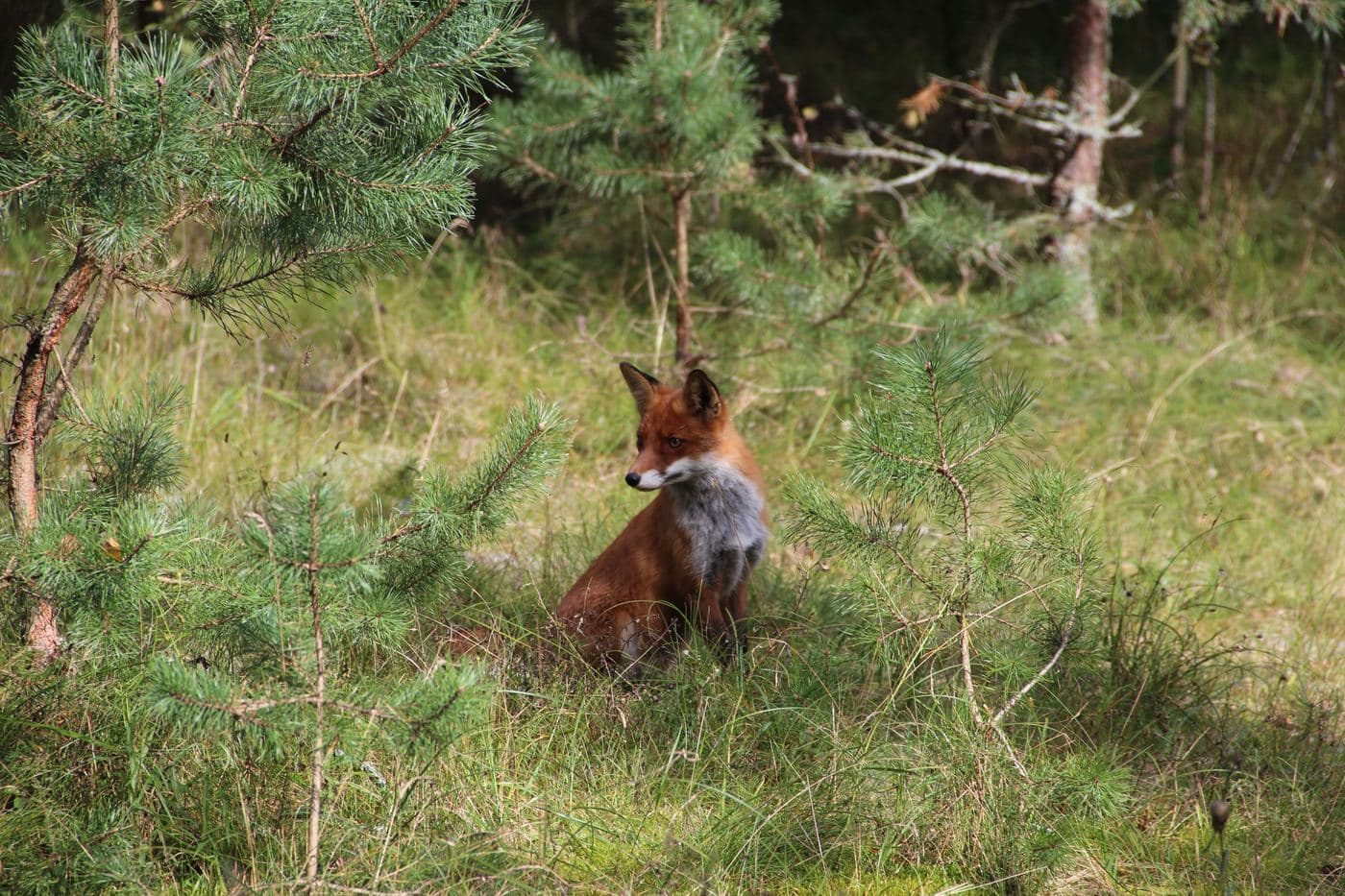 Fox ControlFree
What this involves
- An initial conversation about what's being lost, when, and where: lambs, poultry, or ground-nesting birds
- Checking the evidence to confirm a fox is responsible, rather than mink, badgers, dogs, or scavenging after a death from other causes
- Looking at fox activity on the land, including likely dens, routes, and the times foxes are moving
- Targeted, legal, and humane control focused on the foxes actually causing losses
- Planning for safety around livestock, public footpaths, buildings, and neighbouring land
- Follow-up to confirm the losses have stopped
Thermal and night vision: finding the right fox
Most fox activity happens in the dark, so control is carried out with thermal and night vision. A thermal scope picks up a fox's body heat at long range, through cover and in complete darkness, which means each animal can be identified clearly, and the ground beyond it checked, before any decision is made. This clip, from one of our own outings, shows a fox mousing a bush in open ground near trees.
Why it matters
Left unmanaged, fox damage and predation can cause real financial and emotional loss for farmers and smallholders, and can undo years of work on conservation land. A measured, humane response protects livestock and ground-nesting birds without unnecessary or indiscriminate action.
Fox control for lambing, poultry, and ground-nesting birds
Most fox problems on farmed land fall into one of three situations. At lambing, newborn lambs are most exposed in their first day or two, before they're steady on their feet (see fox control for lambing farms). With poultry (see fox control for poultry keepers), a single visit can end in surplus killing, with far more birds lost than a fox could ever eat. And on conservation or stewardship land, curlew, lapwing, and skylark nest on open ground, where fox pressure in spring can decide whether a season's nests succeed. Each needs a slightly different approach, and the timing matters as much as the method.
Making sure it's really a fox
Not every loss on the farm is down to a fox. A fox will readily scavenge a lamb that died of something else, and mink, badgers, and dogs all raid poultry too. Crows and ravens will also take the eyes and tongue of a weak lamb while it's still alive. Checking the evidence first (bite marks, entry points, timing, and what's been taken or left behind) means control only goes ahead where it will actually stop the losses. If it turns out not to be a fox, you'll be told so, along with what's more likely to help.
How fox control is carried out
There's no close season for foxes, but the methods are regulated and welfare law applies throughout. Control is carried out by a certificate-holding professional with your permission to be on the land, by rifle, using thermal and night vision to identify each fox clearly before any shot is taken. Depending on the ground and the season, that means stalking foxes on their usual routes, calling them in, or drawing them to a bait station where a safe shot is possible. Nothing indiscriminate is used. Safety comes first: shots are only taken where the background is safe and livestock, footpaths, and neighbouring property are accounted for. Practical measures like secure housing from dusk and well-maintained electric netting are part of the conversation too, since they cut the opportunity for losses in the first place.
Fox control for game shoots
Shoots feel fox pressure at two points in the year: in spring, when wild game birds are nesting, and in summer, when poults go into release pens and a single fox can kill a large number in a night. Control is planned around both, working the pen surroundings and the routes foxes use to reach them, and fitted around your keeper's routine and the shooting calendar. See fox control for game shoots.
Why fox control is free
Fox control works on the same model as our deer management: there's no invoice at the end of it. That also means there's no incentive to do more than the situation calls for. The aim is to stop the losses, not to clear every fox from the area, which is neither realistic nor necessary. Read more about why the free model works.
Fox control across Yorkshire and the North
We cover farms, smallholdings, and estates across North Yorkshire, East Yorkshire, South Yorkshire, West Yorkshire, North Lincolnshire, East Lancashire, South Durham, and Teesside, from hill lambing in the Dales and Bowland to arable and poultry farms in the vales, game shoots, and conservation land along the Humber.
What to expect
- 1
Understand the problem
A conversation about what's being lost, when, and where on the land.
- 2
Confirm it's a fox
Checking the evidence and fox activity before any control goes ahead.
- 3
Targeted control
Humane, legal methods applied only where the evidence points to activity.
- 4
Confirm and follow up
Regular check-ins to make sure losses have stopped and the situation is resolved.
Common questions
Yes. There's no charge to landowners or farmers, whether fox control is carried out on its own or alongside deer management. There's no callout fee and nothing to pay at the end.
Yes. Foxes aren't a game species, so there's no close season, but the methods used are regulated and welfare law always applies. Control here is carried out legally and humanely by a professional holding the appropriate certificates, with the landowner's permission.
No, and that isn't the aim. Foxes are present on most farmed land without causing losses. Control focuses on the foxes actually causing a problem, at the times it matters most, such as lambing or the nesting season.
Foxes typically bite at the neck and throat, often kill more birds than they take, and may carry one or two away. Mink, badgers, and dogs each leave different signs. If you're not sure, working that out is part of the visit, and it's free.
Fox control is a form of rural pest control, and that's what this is: dealing with the fox causing losses on farms, smallholdings, shoots, and conservation land. It's carried out by rifle, by a certificate-holding professional, only where a safe shot is possible, so it isn't always suited to houses, gardens, or built-up areas.
Chris Donaldson, an experienced, certificate-holding fox controller and stalker, who also manages deer across the same area. Control is by rifle, using thermal and night vision, and only where the evidence points to a fox.
Normally the same day. Call or text with what's being lost and where, and Chris will get back to you the same day and get out to you as soon as it can be arranged, which is usually the same day too.
Just a short permission letter confirming Chris has your permission to be on the land with a rifle. It's needed for firearms purposes and it protects you both. There's nothing else to sign and nothing to pay.
Not usually. Every rifle is moderated, so shots are quiet. You're told every time before Chris is on the land, so you always know when work is happening.
Yes, where it can be done safely. Safety is the first priority: control is by rifle, so it needs a safe backstop and a clear view of what's beyond the fox. If a safe shot isn't possible on your ground, you'll be told so, along with what's more likely to help.
No. Fox control is available on its own. Many landowners use both services, but you don't need deer management to get help with foxes.
Farms, smallholdings, estates, and conservation or stewardship land across Yorkshire, North Lincolnshire, East Lancashire, South Durham, and Teesside. Fox control is carried out on rural land where it can be done safely.
The fox year
What foxes are doing right now
This month · November
What's happening on the land
- Dispersing foxes settle into new territories
- Poultry need shutting in earlier as the nights draw in
- Plan winter control ahead of the breeding season
The fox year
- Mating
- Cubs
- Higher risk to livestock and game
- Ground-nesting birds breeding
- Young foxes on the move
There's no close season for foxes in England (see when you can legally control foxes), but control in spring and early summer is planned around cubs that still depend on their parents. Timings are typical and vary with the weather and the area.
Month by month
January
- Mating season peaks, with vixens screaming at night
- Dog foxes range widely and are seen more often in daylight
- A good time to plan control ahead of lambing and nesting
February
- Vixens are pregnant and choosing dens, so look for fresh digging in banks
- Mating winds down for the year
- Before lambing check fencing and night housing for early lambs
March
- Cubs are born from mid-March, out of sight underground
- Lambing is under way, and newborn lambs are most at risk
- Dog foxes hunt harder to feed the vixen
April
- Cubs start to appear above ground at the den
- Ground-nesting birds like curlew and lapwing are on eggs
- Pressure on poultry rises as adults feed growing cubs
May
- Cubs are weaned and growing fast, so adults hunt by day as well as night
- Poultry losses often peak, including daytime attacks
- Wader chicks are on the ground and at their most exposed
June
- Cubs explore further from the den and start learning to hunt
- Long evenings mean foxes around runs in daylight
- Ground-nesting birds are still raising chicks
July
- Family groups start to break up as cubs become independent
- Silage and hay cutting often uncovers dens and regular runs
- Poultry are still at risk at dawn and dusk
- Game bird poults go into release pens, and foxes soon find them
August
- Young foxes are close to adult size and hunting alone
- Standing crops give foxes plenty of cover
- Harvest opens fields up and makes movement easier to spot
- Release pens are at their most exposed, with young pheasants and partridges on the ground
September
- Young foxes start to leave home in search of territories
- Sightings and road casualties start to rise
- Game birds leaving the pens are still easy targets for young foxes
- A good time to check runs and fencing before winter
October
- Dispersal is in full swing, with foxes turning up on new ground
- Longer nights mean more activity around poultry at dusk
- Game birds spreading out from the pens are still being picked off
- Dens in use are easier to find as cover dies back
November
This month- Dispersing foxes settle into new territories
- Poultry need shutting in earlier as the nights draw in
- Plan winter control ahead of the breeding season
December
- Mating season begins, with screaming and barking at night
- Foxes are on the move and range widely
- Winter is the main time for control, before cubs are born in spring
Ready to talk about your land?
Not sure it's a fox? Text a photo to Chris on 07397 942663 and he'll get back to you the same day.