
Fox or Badger? How to Tell What Dug That Hole in Your Field
By Chris Donaldson · 4 October 2026
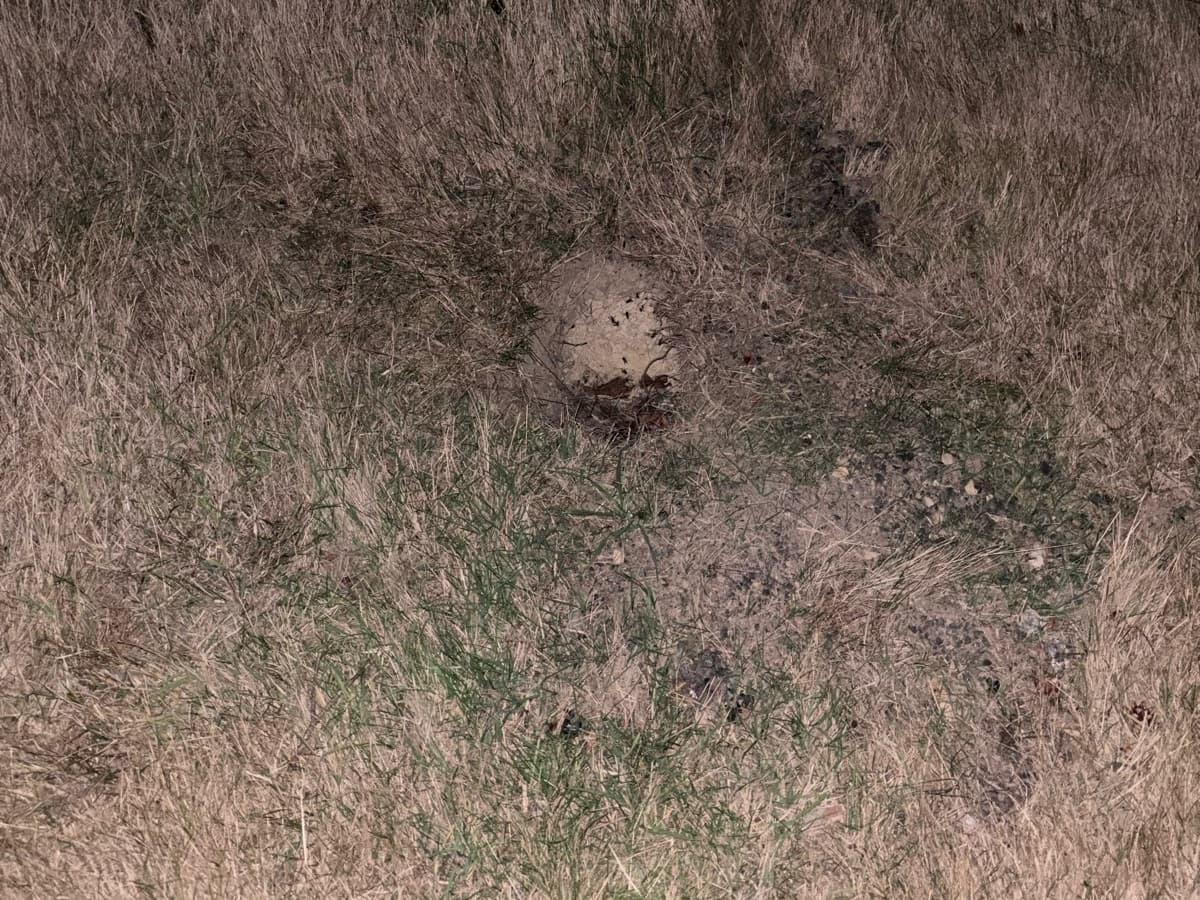
The hole in the photo above turned up overnight in a grass field in late September: freshly dug, soil thrown out across the surrounding grass, and something pale and papery sitting in the bottom of it. The landowner's first thought was a fox. It wasn't. It was a badger, and the pale layer in the bottom is what's left of a wasp nest it had dug out and eaten.
It's an easy mistake to make. Both animals dig, both are active at night, and both turn up on the same farmland. But the holes they leave behind look different once you know what to look for, and the difference matters more than most people realise.
Why badgers dig out wasp nests
Badgers will eat almost anything they can find, and the grubs inside a wasp or bumblebee nest are a rich, easy meal for an animal with a strong sense of smell, powerful front claws, and a thick enough coat to shrug off most of the stings. Nests are at their biggest in late summer and early autumn, which is exactly when this kind of digging turns up. The giveaway is a single, deep, purposeful hole with fragments of grey or tan papery comb scattered in or around it. Foxes don't go after wasp nests in the same way, so if you find comb in the spoil, you can be fairly confident you're looking at a badger.
Snuffle holes and turned-over turf
Most badger digging is less dramatic than a raided wasp nest. Badgers forage for earthworms, beetle larvae, and leatherjackets by pushing their nose into the ground and scraping out small, shallow, cone-shaped pits, usually called snuffle holes. A field or lawn dotted with dozens of them, often with patches of turf rolled back, is a classic sign of badgers feeding overnight, particularly after rain when worms are near the surface.
What fox digging looks like
Foxes dig less, and for different reasons. The most common is caching: burying surplus food to come back to later, which leaves a small, neat scrape that's been loosely filled back in, sometimes with a feather or a scrap of fur poking out. Foxes will also dig shallow scrapes after worms and grubs, but rarely on the scale a badger does, and almost never deep enough to reach a wasp nest.
Setts versus earths
When it comes to a proper burrow, the entrance shape is the most reliable clue. A badger sett entrance is wider than it is tall, roughly D-shaped with a flat bottom, and usually has a large spoil heap outside that often contains old bedding like dried grass or bracken. Setts tend to have several entrances, well-worn paths between them, and latrines nearby: small dug pits used as toilets. A fox earth is taller than it is wide, has a smaller spoil heap, and is often surrounded by food remains like bones and feathers, along with a strong musky smell that a badger sett doesn't have. Foxes regularly move into unused sections of badger setts, too, so the two can share the same bank.
Tracks, droppings, and hair
If the ground's soft enough, footprints settle it quickly. A badger print is broad, with five toes in a near-straight row above a wide pad and long claw marks out in front. A fox print is smaller and oval, with four toes and a neat, dog-like shape. Droppings help too: badgers leave theirs in those dug latrine pits, while foxes leave twisted, pointed scats in deliberately prominent spots like tussocks, stones, or the middle of a path. Coarse grey hairs with a dark band and pale tip, snagged on the bottom strand of a wire fence, are almost always badger.
Why getting it right matters
This is where the ID stops being academic. Badgers and their setts are protected under the Protection of Badgers Act 1992. It's an offence to kill, injure, or take a badger, and also to damage, destroy, or block access to a sett, or to disturb a badger while it's occupying one. Filling in or blocking a hole you assume is a fox earth, when it's actually part of an active sett, can land you on the wrong side of that law, even if you didn't know. Any work that would affect a sett needs a licence from Natural England first.
Foxes sit under a different set of rules, and where they are genuinely causing losses, there's a lot more that can lawfully be done about it, which is covered in our piece on when you can legally control foxes in the UK. If you're unsure what's digging on your land, a proper look at the evidence is always the right starting point. If it does turn out to be a fox causing problems, our fox control service is free, and if it's a badger, we'll tell you that straight rather than recommend something that isn't needed or isn't legal.
Wondering about your own land?
Give us a call and we'll talk it through.
Not sure it's a fox? Text a photo to Chris on 07397 942663 and he'll get back to you the same day.
More from the blog