
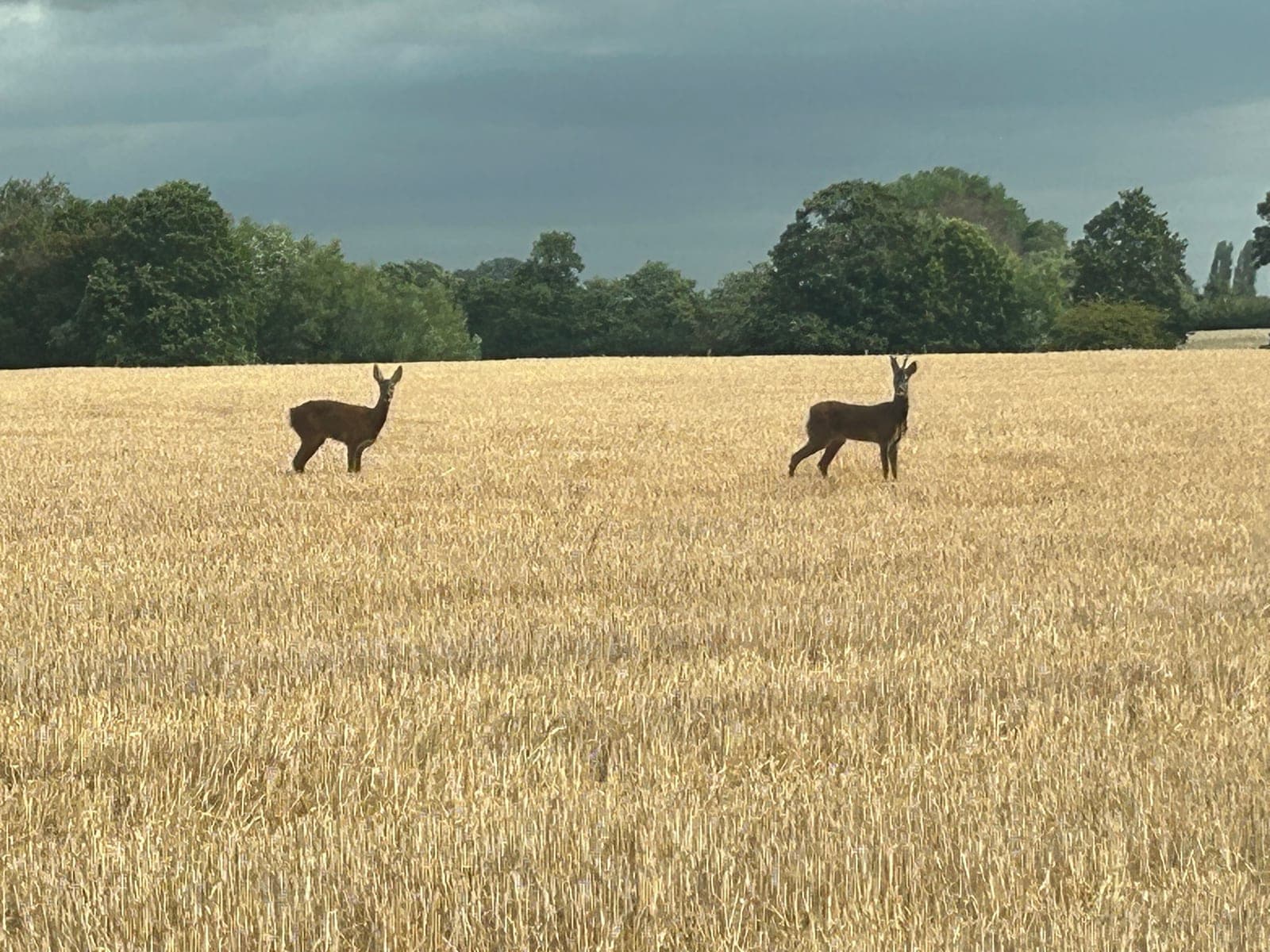
Most deer deterrents work for a few weeks at best. Research on habituation keeps finding the same pattern: deer get startled the first few times a sprinkler fires or an ultrasonic box clicks on, then they learn nothing bad follows, and they stop reacting, sometimes within days.
Why static deterrents fail faster than people expect
Anything that does the same thing in the same place every time is the easiest for a deer to learn past. Ultrasonic units, single-tone alarms, and motion-activated sprinklers all fall into this category. They're not worthless, they buy you a genuinely quiet fortnight or two while the deer work out the pattern, but treating one as a permanent fix is where people lose money.
What actually slows habituation down
Research on elk and deer found that combining an audio cue with a visual one, a noise plus a flashing light, made animals more likely to flee and slowed the rate they got used to it, compared with either alone. Varying the stimulus, not just its intensity but which sense it hits, is the difference between a deterrent that lasts a season and one that stops working before autumn's out.
Scent and taste deterrents: mixed results
Predator urine, garlic sprays, and soap-based repellents are the most commonly sold options, and the evidence for them is patchier than the marketing suggests. Taste-based repellents that actually modify how the plant tastes, blood-based products and capsaicin among them, showed real effectiveness in trials. Scent-only products that just smell unpleasant to humans tend to underperform once deer are hungry enough, since motivation to feed matters more than the smell of a threat that never materialises.
Where deterrents genuinely fit, and where they don't
The economics change completely with scale. A motion-activated sprinkler covers a few hundred square metres at most, and an ultrasonic unit not much more, which is fine when what you're protecting is a vegetable patch or a smallholding's paddock. Try to scale that up to a farm or a block of woodland and the maths stops working: you'd need dozens of units, each one still habituating on its own schedule, still needing batteries or power, still only covering its own small patch while the rest of the boundary sits open. A single fence line does the job those dozens of units can't, in one continuous barrier rather than a scatter of individually defeatable points.
That's really the dividing line. For a large garden or smallholding, a deterrent or two is a reasonable first thing to try. For a farm or woodland owner dealing with pressure across several acres, deterrents aren't a smaller version of the same solution, they're solving a different-sized problem than the one that actually exists. At that scale it's worth going straight to what does hold up across a whole boundary: the fencing, guards, or culling comparison is the better starting point. Where deterrents aren't enough, fencing, guards, or culling compares the alternatives.
The step that tells you if it's even worth trying
A deterrent aimed at the wrong species, or used where the real pressure is far higher than a garden-scale product can handle, was never going to work regardless of habituation. A Deer Number Survey & Impact Assessment tells you what's actually on the land before you spend money finding out the hard way.
Wondering about your own land?
Give us a call and we'll talk it through.
Or call Chris on 07397 942663. He'll call you back the same day.
More from the blog