Hit a Deer? What to Do, and Why Collisions Peak in Autumn
By Chris Donaldson · 16 October 2026
Every autumn the number of deer on the roads climbs, and so does the number of drivers who meet one at speed. Figures from the Deer Initiative put the number of deer involved in collisions in the UK at somewhere between 42,000 and 74,000 a year, with more than 400 people injured and up to 20 killed. Many collisions are never reported, so the real figure is likely toward the top of that range.
Why collisions peak in autumn
When the clocks go back at the end of October, the evening drive home moves into the hour around dusk when deer are most active. At the same time, fallow and red deer are rutting, and deer of every species are moving more as they feed up for winter. The result is a sharp rise in collisions from October through to December. There's a second, smaller peak in May and June, when young roe leave their mothers and wander in search of territory. Our deer calendar shows how the year breaks down month by month. There's more on that in why deer damage gets worse in autumn.
How to cut the risk
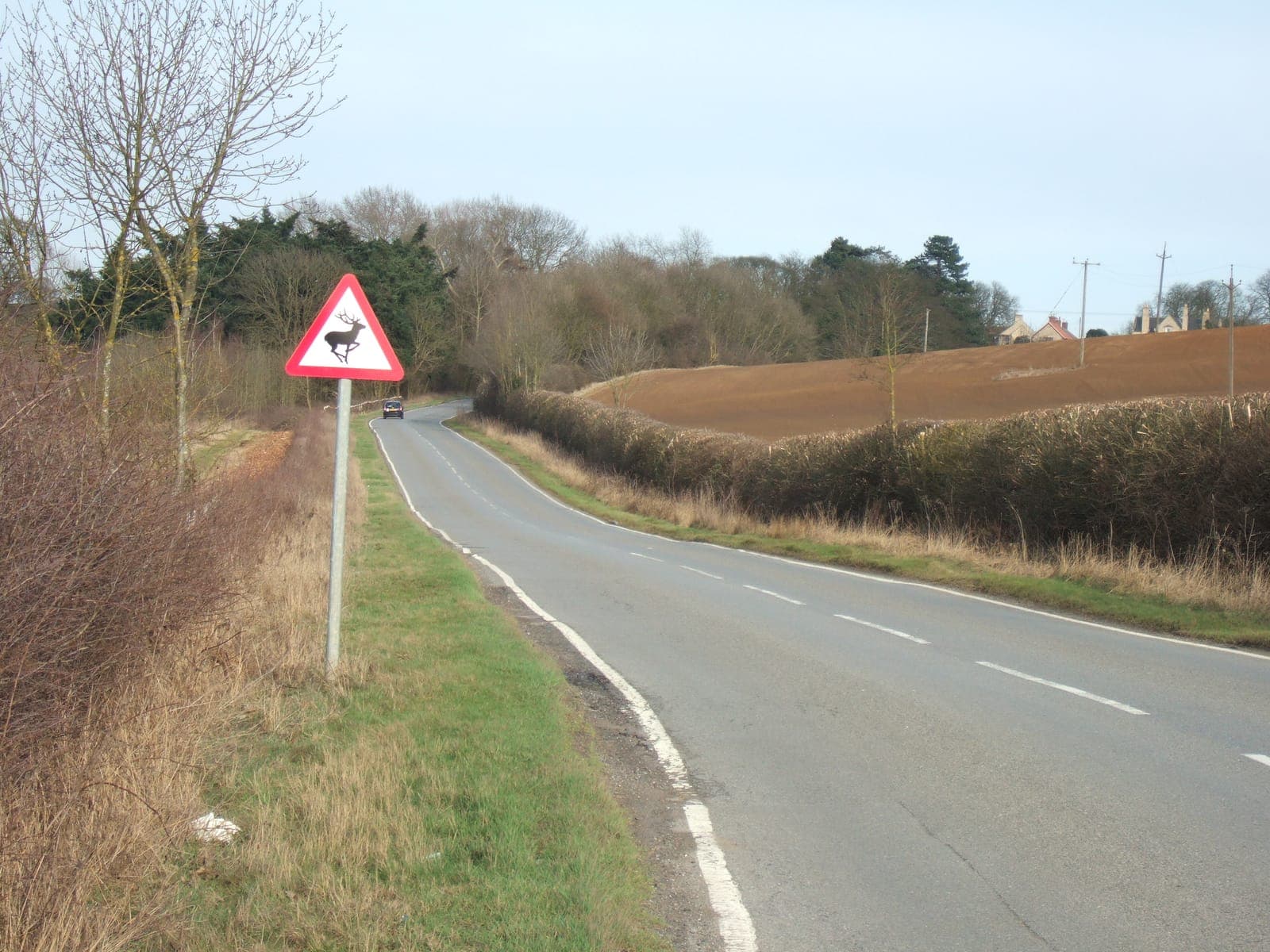
Take deer warning signs seriously. They're put up where deer regularly cross, not at random. Slow down at dawn and dusk, especially on roads that run through woodland or between woods and open fields, and use full beam when there's no oncoming traffic, so you see eyes and movement on the verge sooner.
Where there's one deer, expect more. Roe often move in pairs or small family groups, and fallow in herds, so if one crosses in front of you, slow right down and wait, because the next is often a few seconds behind.
If a collision can't be avoided, brake firmly in a straight line rather than swerving. Swerving into oncoming traffic, a tree, or a ditch is usually far more dangerous than hitting the deer itself.
If you hit a deer
Stop somewhere safe, put your hazard lights on, and check yourself and any passengers. If anyone is hurt, or the deer or your vehicle is blocking the road and putting other drivers at risk, call 999.
Don't approach an injured deer. A frightened, injured animal can kick out hard, and a buck or stag can do real damage with its antlers. Keep back, and keep anyone else back too.
Report it to the police on 101, even if the deer ran off. You aren't legally required to: deer aren't among the animals listed in section 170 of the Road Traffic Act 1988, which covers dogs, horses, and farm livestock. But reporting it means someone can be sent to find an injured deer and deal with it humanely, rather than leaving it to suffer. Note exactly where it happened, with the road number and a nearby landmark if you can.
Leave the carcass for the police or the highway authority to deal with. Even when a deer looks unmarked, meat from a road casualty hasn't been handled or inspected the way venison for the table should be. For any insurance claim, take photos of the scene and the damage, and keep the police reference number.
For landowners next to busy roads
If deer regularly cross from your woods or fields onto a road, that's worth knowing about. Road casualties are part of the evidence a Deer Number Survey & Impact Assessment looks at, alongside damage on the land itself, and where numbers are high, managing them can mean fewer deer crossing. If you're seeing more deer on the roads around your land this autumn, get in touch and we'll take a look.
Wondering about your own land?
Give us a call and we'll talk it through.
Or call Chris on 07397 942663. He'll call you back the same day.
More from the blog