Fraying and bark stripping look similar at a glance and get blamed on the same thing, but they're not the same behaviour. Fraying is an antler habit: bucks and stags cleaning off velvet or marking territory on a stem, from spring through to the rut. Bark stripping in winter is about food, and that difference matters for what actually stops it.
Why food scarcity drives it
The layer just under bark, the cambium, carries sugars and starches, and it becomes a genuine food source once preferred forage gets scarce or buried under snow. Bark stripping for feeding tends to get worse in a harsh winter precisely because the easier options have run out, not because of anything to do with the rut or antlers.
Which trees carry the most risk
Young broadleaves with thin bark are the most exposed, simply because the cambium is easier to reach through less material. Trees already stressed from transplanting or a dry summer are often targeted more, since there's less established bark to get through before reaching anything worth eating.
Telling feeding damage from rut fraying
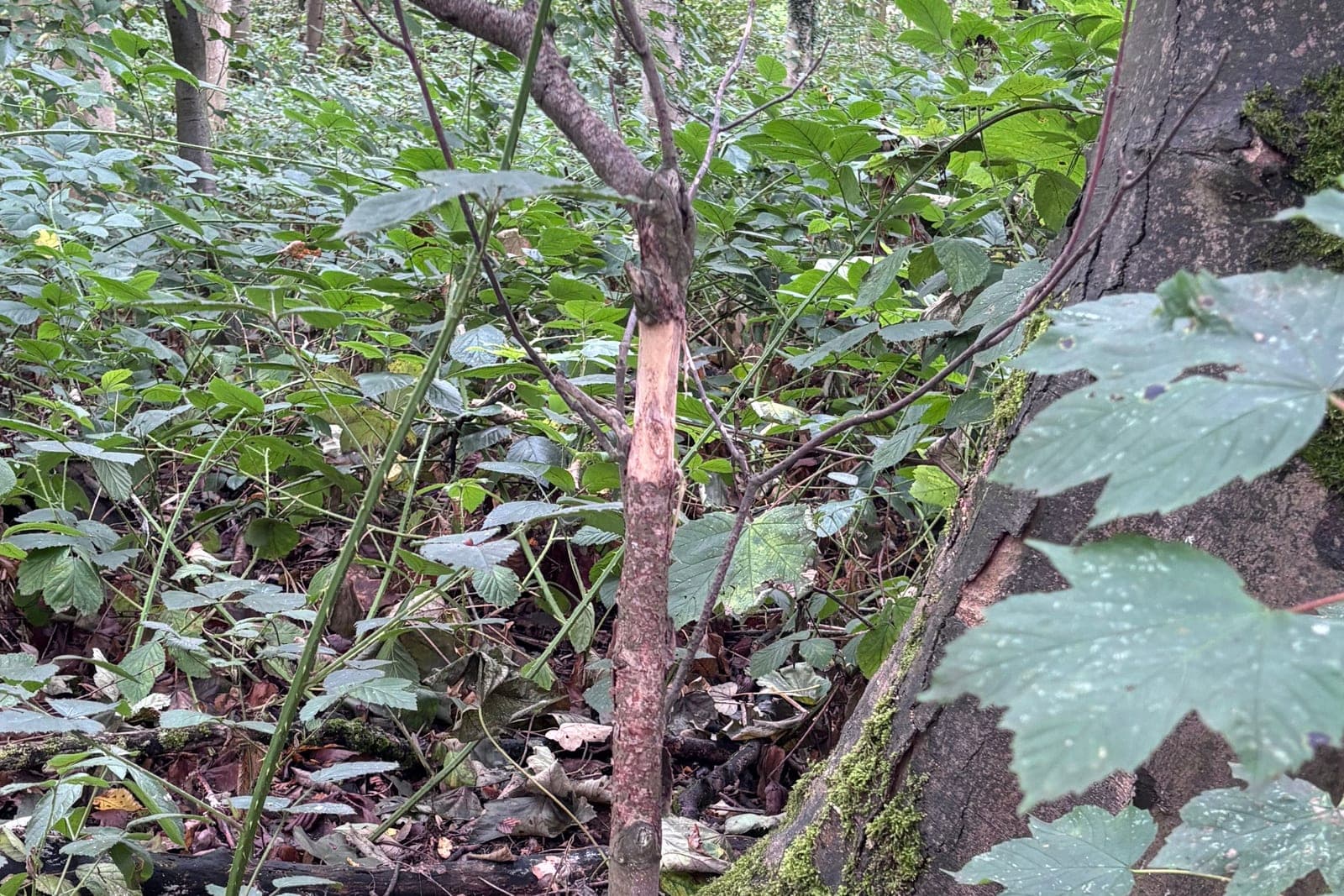
Fraying is done with antlers, so the bark is shredded and left hanging in tatters, often with broken side shoots, on stems from finger to wrist thickness. Roe fray low, usually below a metre, while fallow and red go higher. Winter bark stripping is done with teeth: bark pulled off in vertical strips, with incisor marks in the exposed wood. It's mostly the work of red, sika, and fallow deer; roe do it far less. Both can kill a young tree if bark comes off right around the stem, which is why it's worth knowing which one you're looking at.
Whether existing protection is enough
A guard sized correctly for browsing height, as covered in our tree guards post, usually stops bark stripping too, since it physically blocks access to the stem regardless of the deer's motive. Where guards have slipped, loosened, or were never checked after a wet autumn, winter is exactly when that gap gets found and used.
Our deer calendar shows when bark stripping risk peaks alongside the rest of the deer year.
Wondering about your own land?
Give us a call and we'll talk it through.
Or call Chris on 07397 942663. He'll call you back the same day.
More from the blog