
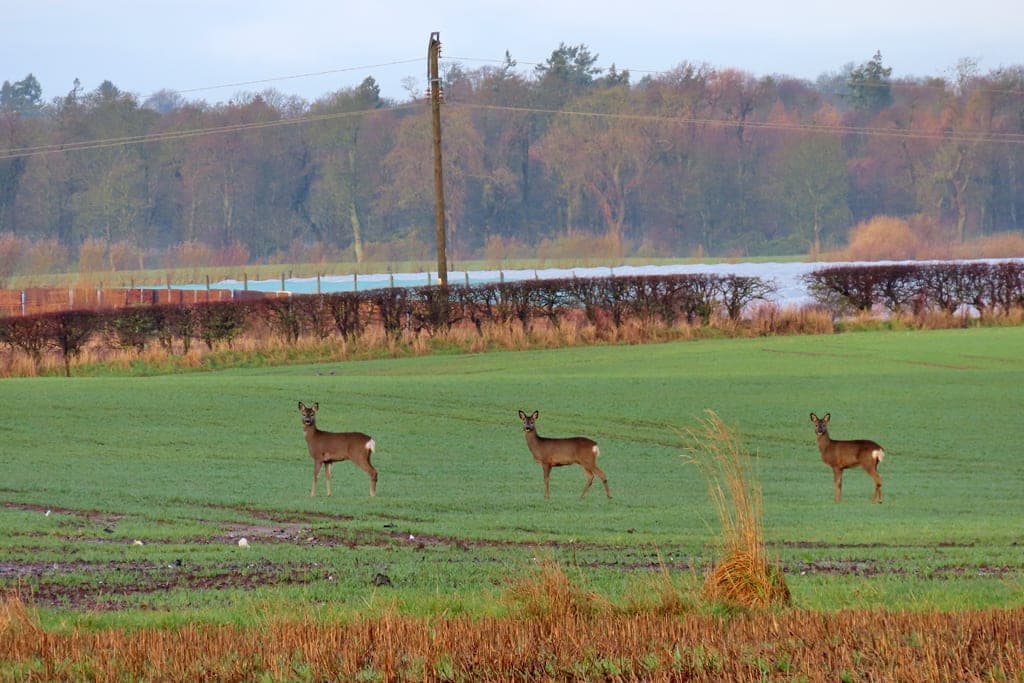
Calls about deer activity pick up noticeably through October and November, and it isn't in people's heads. Several real, separate things are happening at once, and they don't all affect the same species the same way.
The fallow rut, not the roe rut
Roe deer rut in July and August, so if fallow are the species locally, October is when their rut lands instead, peaking mid-month, bringing more movement, more aggression between bucks, and a lot more noise. A rutting fallow buck's groan is loud enough to carry across a field at night, which is usually the first thing people notice before they connect it to anything else.
Deer moving onto winter ground
Once the harvest is in and the leaves start to drop, the cover and food deer relied on all summer disappear. They shift onto winter ground, toward woodland edges, newly sown cereals, and fresh planting, and start feeding up for the months ahead. That's why deer can suddenly turn up somewhere they haven't been seen all year, not because numbers have risen, but because the same animals are using the land differently. (Young roe striking out on their own is a spring thing, peaking in May and June, before the next year's kids are born.)
The clock change and road collisions
This one affects every species equally and has nothing to do with rutting at all. When the clocks go back, evening rush hour shifts into the exact window deer are most active at dusk. The result is a well documented seasonal spike in deer-vehicle collisions across the UK every autumn, driven by human commuting patterns lining up with deer behaviour that hasn't changed at all.
What this means for land in the run-up to winter
Increased movement and territorial pressure both raise the odds of damage to young trees and hedgerows that were fine all summer. It's a reasonable time of year to check protection is still doing its job before deer activity peaks further into winter, and to get a proper picture of what's changed if damage has shown up somewhere new. A Deer Number Survey & Impact Assessment can tell you whether it's a genuine increase or the same animals behaving differently for the season. Our guides to the signs of a deer problem and tree guard height cover what to check.
For the whole year at a glance, including when each species ruts and when seasons open and close, see our deer calendar.
Wondering about your own land?
Give us a call and we'll talk it through.
Or call Chris on 07397 942663. He'll call you back the same day.
More from the blog