
Silvopasture and Agroforestry Grants: What They Actually Pay For
By Donaldson Deer Service · 15 July 2026
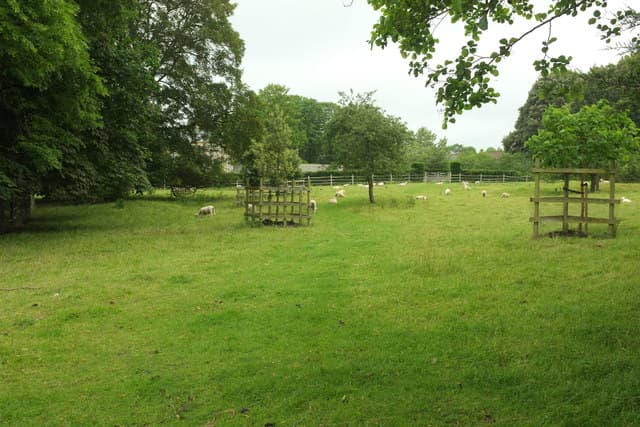
Photo: Derek Harper / Geograph.org.uk, CC BY-SA 2.0
Silvopasture, trees planted into land that's still grazed, gets searched for as if it's its own grant. It isn't. It's one of two system types inside the agroforestry actions available through the Sustainable Farming Incentive and Countryside Stewardship Higher Tier, the other being silvoarable, trees on arable land. Same funding mechanism, different land use.
What the payment is actually based on
Agroforestry payments scale with tree density, not land use type. Four bands cover the range: very low density, 30 to 50 trees per hectare, pays £248 per hectare per year. Low density, 51 to 130 trees per hectare, pays £385. Medium density, 131 to 250 trees per hectare, pays £595. High density, 251 to 400 trees per hectare, pays £849. Countryside Stewardship Higher Tier also funds a one-off £1,268 payment for a formal agroforestry plan before you commit to a density band.
What it doesn't pay for
This is the part that catches people out. Those figures are ongoing incentive payments for maintaining a given tree density on the land, not capital funding for planting, guards, or fencing. Getting the trees established and protected in the first place is a separate cost, usually met through other capital grants or your own budget, not the agroforestry maintenance rate itself. Assume the £248 to £849 per hectare covers establishment and you'll be short before the trees are even in the ground.
Why silvopasture specifically raises the stakes on protection
Putting young trees into land that's actively grazed means two sources of pressure at once: livestock and deer, on the same stems, during the exact window when a tree is most vulnerable. In a silvoarable system there's no livestock in the mix, so the establishment risk is lower by comparison. In a silvopastoral one, a tree that gets past cattle or sheep can still be lost to deer browsing or fraying, and losses at that stage aren't separately grant funded to replace. What goes in first has to survive, because there's no second chance built into the funding.
Getting the sequencing right
The practical fix is knowing what's on the land before trees go in, not after. A Deer Number Survey & Impact Assessment tells you what species are present and what pressure to expect, which shapes the guard height or fencing spec you actually need before committing capital to establishment. For farms anywhere across Yorkshire and the surrounding counties looking at silvopasture, that's worth doing at the planning stage, alongside whatever grant application is going in, not as an afterthought once damage shows up. The current density bands and rates are also kept up to date on our Grants & Funding page.
If deer pressure turns out to be minimal, that's useful information too. It might mean lighter, cheaper protection than you'd otherwise budget for, which matters when the establishment cost isn't the part that's grant funded.
If you're weighing up Countryside Stewardship against the simpler SFI route, our Grants & Funding page walks through how each application actually works.
Wondering about your own land?
Give us a call and we'll talk it through.
More from the blog