
Five Signs Your Land Has a Deer Problem
By Donaldson Deer Service · 10 February 2026
Deer damage tends to creep up on you. It's rarely one dramatic event, more a slow build-up that's easy to write off until you look back and realise how much growth you've actually lost.
Browsing damage on young trees and hedgerows
The most common thing I get called out for is browsing damage on young trees and new hedgerow planting. Deer go for the freshest growth, and a sapling that gets browsed hard enough, often enough, can be stunted or killed within a season or two.
A clear browse line along hedges and woodland edges
A browse line is another good giveaway. Look along a hedge or woodland edge for a clean, level line at roughly deer height, stripped bare underneath, still growing above it.
Worn trails through fences and field margins
Worn trails through fences or field margins are worth a look too, particularly if they lead straight to a crop field or orchard. Deer are creatures of habit and tend to use the same routes night after night.
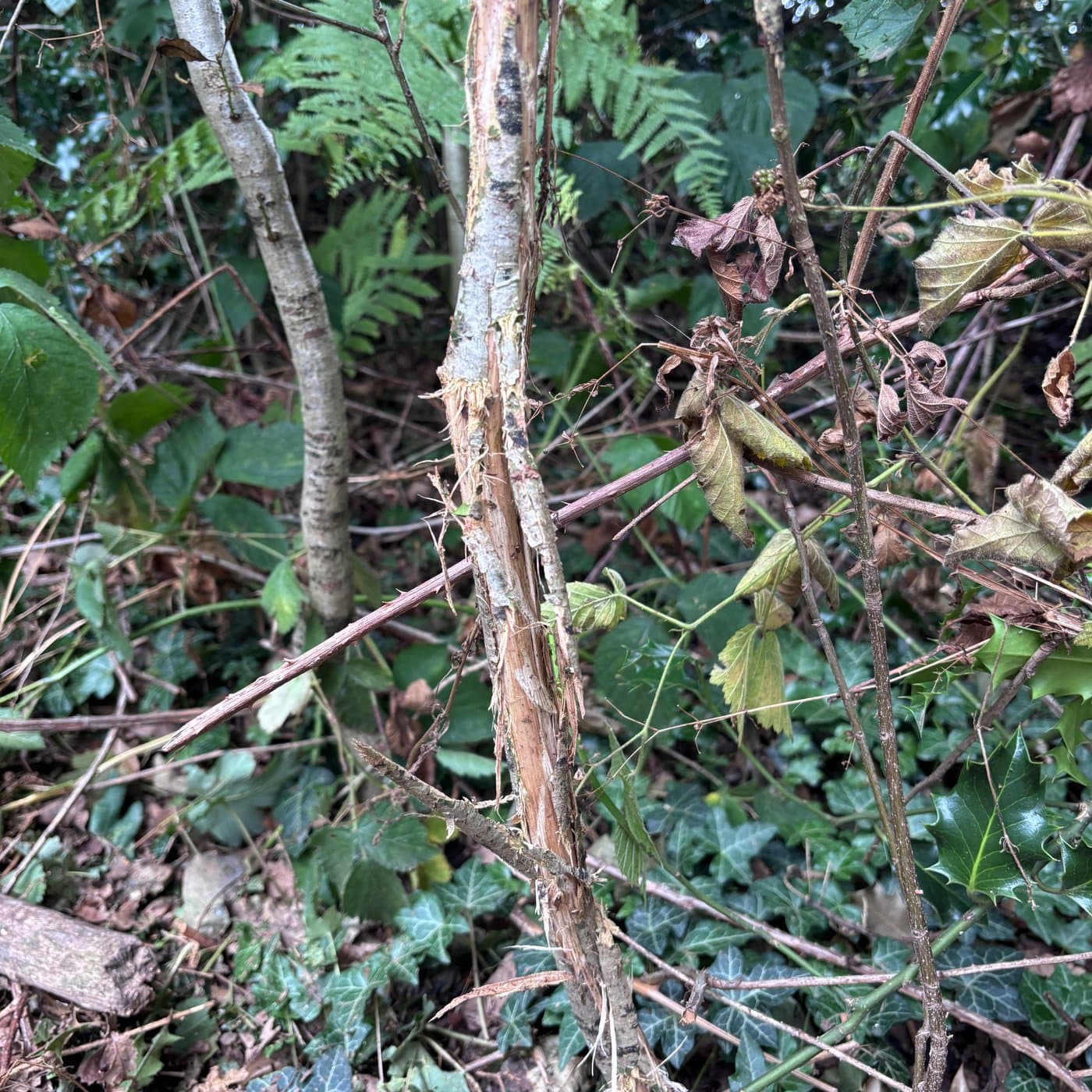
Bark stripping and fraying on young stems
Bark stripping and fraying gets mistaken for other wildlife damage fairly often, but it's a classic deer sign. Bucks fray the velvet off their newly hardened antlers on young stems in the run-up to the rut.
Regular dawn or dusk sightings
Don't discount a handful of dawn or dusk sightings just because the numbers seem small, either. Deer are most active at those times, and what looks like the odd animal passing through can be a much bigger local population using your land after dark.
If any of that sounds familiar, on land anywhere across Yorkshire and the surrounding counties, the next step is usually a proper look at what's going on rather than guessing. A Deer Number Survey & Impact Assessment gives you an honest, evidence-based picture of what's happening on your land, and whether anything actually needs doing about it.
Wondering about your own land?
Give us a call and we'll talk it through.
More from the blog