Deer in Winter Cereals: How Much Damage Is Too Much?
By Chris Donaldson · 14 November 2026
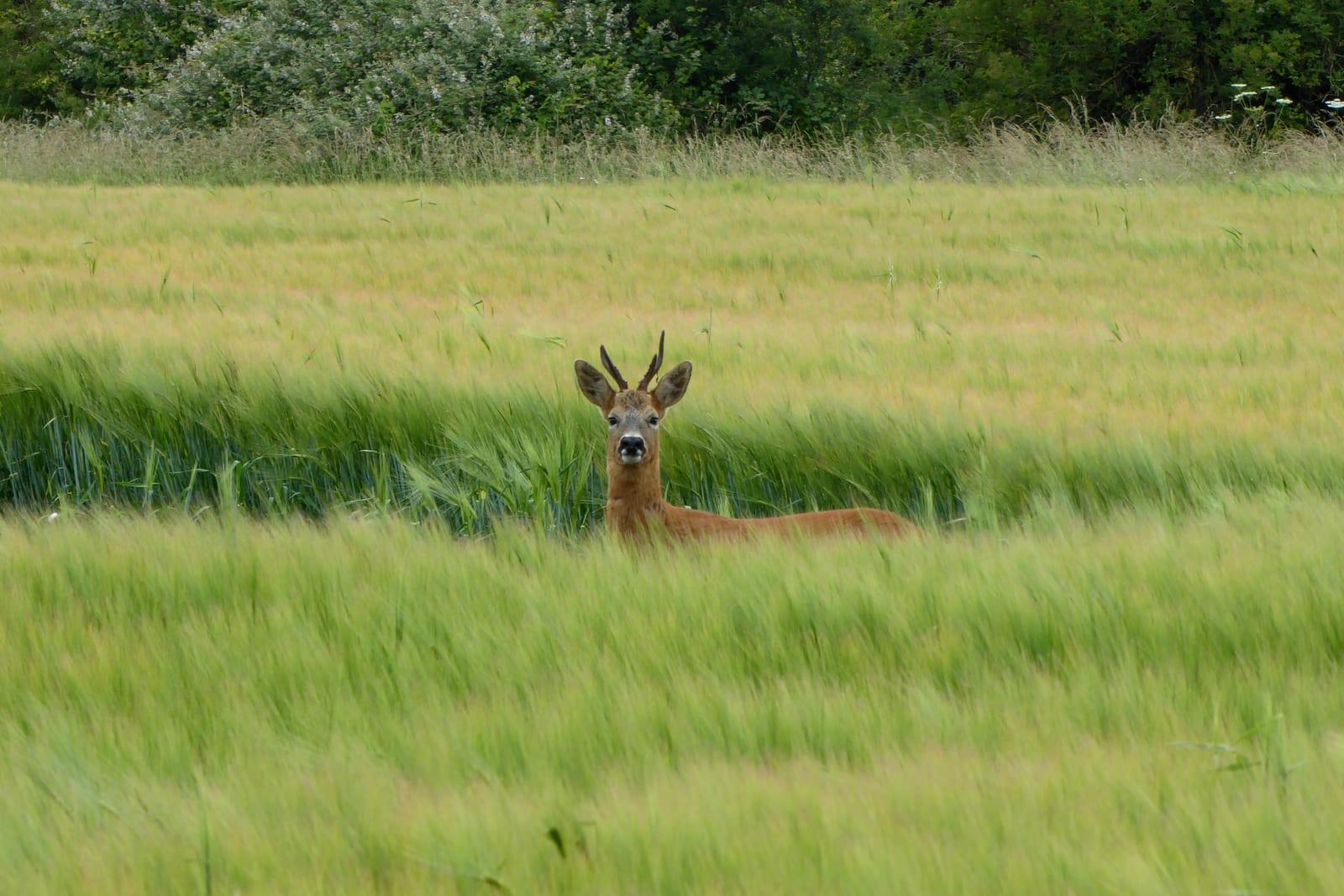
Roe deer grazing winter wheat and barley are a familiar sight across arable land in winter, often in small groups along a field edge at dawn or dusk. It's natural to worry about the crop. But deer in a cereal field isn't the same as lost yield, and knowing the difference saves both money and worry.
Why deer graze winter cereals
In winter, the browse deer normally rely on is scarce, and a young cereal crop is green, nutritious, and often right next to the woods and hedges they lie up in. Roe deer in particular feed along field margins close to cover, coming out at dawn and dusk and moving back into cover in daylight.
Light grazing often isn't the problem
Winter cereals regrow from the base of the plant, so light grazing before the crop starts growing away in spring often has little lasting effect on yield. Some farmers even graze forward winter cereals with sheep for the same reason. A few deer working a field edge through the winter can look worse than it is.
When deer damage to winter wheat becomes a real cost
The picture changes when grazing is heavy and repeated in the same patches, when it carries on into spring as the crop starts to grow away, or when numbers build up so that whole headlands are grazed down and trampled. Fields next to woodland usually take the worst of it, and the damage tends to be patchy rather than spread evenly across the field.
Fallow deer in cereals
Everything above is written with roe in mind, and fallow behave differently. Fallow deer are the herd animal of the two, often moving and feeding in groups rather than singly or in twos, and they're a bigger deer. A herd working a field puts far more grazing and trampling onto the same ground than a pair of roe, so damage that would stay light with roe can become heavy quickly. Fallow also tend to use bigger blocks of open ground, so it's worth looking well into the field, not just along the headlands.
Fallow populations also tend to be concentrated around particular woods and parkland, and the herd will keep returning to the same fields. If you're seeing groups of a dozen or more, or large flattened areas where a herd has bedded or crossed the crop, treat it as a more serious problem than the occasional roe at the edge. Not sure which you have? Our deer species guide explains how to tell them apart.
It isn't only what they eat. Deer, fallow especially, often lie up in standing corn and cereal fields, and they make tracks straight through the crop as they move between cover and feeding. Where a herd beds down or keeps using the same route, the crop is flattened, and flattened patches are more prone to lodging and wind damage before harvest. Once the crop is down it can be hard to harvest cleanly, so the loss can be well beyond the area they actually grazed. Look for the matted, bedded-down patches and straight runs through the crop as well as the grazing.
Deer, rabbits, or hares?
Deer have no upper front teeth, so they tear vegetation and leave a ragged edge. Rabbits and hares leave a clean, angled cut. Rabbit grazing also tends to be cropped very short and concentrated close to burrows and hedge bottoms. Our guide to the signs of a deer problem covers the other evidence worth looking for.
What to do about it
The answer starts with knowing how many deer are using the land and how much damage they're really doing. A deer survey gives you that, free. Where numbers do need bringing down, culling is carried out selectively and within the seasons, and it costs you nothing, because our deer management is free.
Wondering about your own land?
Give us a call and we'll talk it through.
Or call Chris on 07397 942663. He'll call you back the same day.
More from the blog