
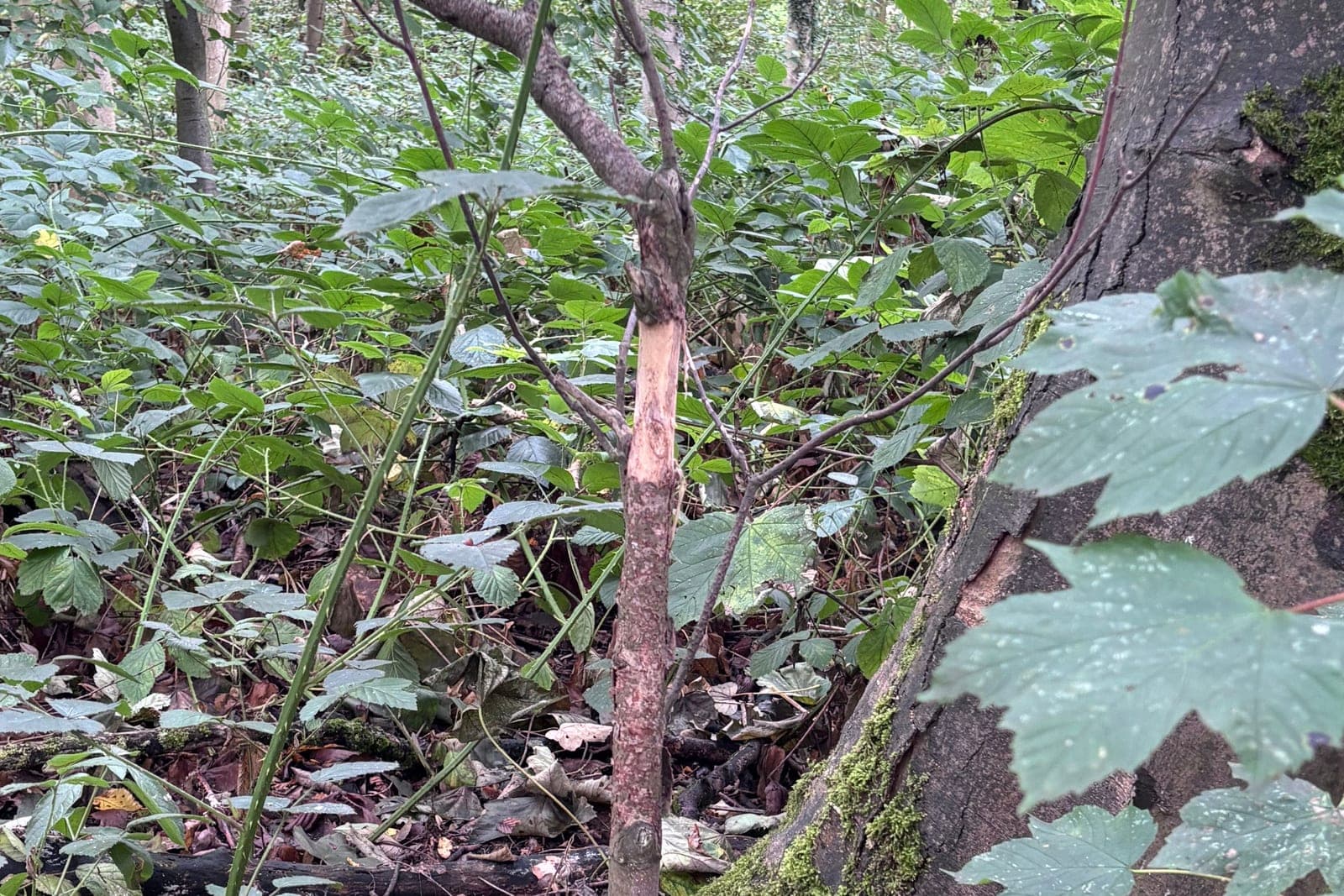
How Deer Damage Hits Woodland Establishment and Timber Quality
By Chris Donaldson · 10 October 2026
For anyone growing trees as a crop, deer damage is a cost problem as well as an ecological one. Defra's own evidence is that a third (33%) of English woodlands are negatively affected by deer, up from about a quarter in the early 2000s, as set out in the Deer Impacts Policy Statement. Here is where that damage actually lands.
Establishment and restocking
Young trees are most exposed in the first few years. Browsing of leaders and side shoots sets growth back, trees that survive can end up stunted or forked, and failures mean replacing trees and paying for protection a second time. Confor, the forestry and wood trade body, lists reduced success of woodland creation and restocking, and higher establishment and maintenance costs, among the effects its members see, in its response to the policy statement.
Stem form and timber quality
Damage that doesn't kill a tree can still cost it its value. Repeated browsing and fraying distort the main stem, and the same response lists poorer stem form and timber quality as a consequence of high deer pressure. Bark stripping is the worst case on older stems: removing bark exposes the wood and gives decay a way in.
Natural regeneration
The policy statement also notes that overbrowsing hampers the regeneration of existing woodland and the natural colonisation of new sites. Where woodland management relies on natural regeneration rather than planting, deer pressure decides whether it works at all.
Which deer, and how high
Roe and muntjac browse low, so guards of at least 1.2 metres stop them, while fallow, red, and sika need 1.8 metres. Our tree guard height guide sets out each species, and the signs of a deer problem show how to tell what you have.
What actually helps
Protection and control do different jobs. Guards and fencing protect trees while they establish, and reducing deer numbers lowers the pressure on the whole site. Our guide to fencing, guards, or culling compares them, and grants can cover much of the cost; see the grants guide.
Before choosing, it helps to know what's actually there. A free deer survey and count gives you species, numbers, and the damage on your site. If you manage woodland, see deer management for forestry and woodland owners.
Wondering about your own land?
Give us a call and we'll talk it through.
Or call Chris on 07397 942663. He'll call you back the same day.
More from the blog